My second commission for Chinnor is for the Carriages housing development that is adjacent to the now closed cement works. What remains is the massive chalk pits and towering chalk cliffs that were quarried for over 100 years. What I came to appreciate about this site is that the walls of the quarry reveal a geological history that is rarely seen and if you stop and look you are literally looking at millions of years of chalk being formed on what used to be a sea bed.
When I talked to the Chinnor historical society the ladies who run the society told me that a number of fossils had been found in the quarry when the site was first excavated in the late victorian period and they were on display the Natural History Museum in Oxford. So I headed into Oxford and spent two days sketching fossils that had been found here.
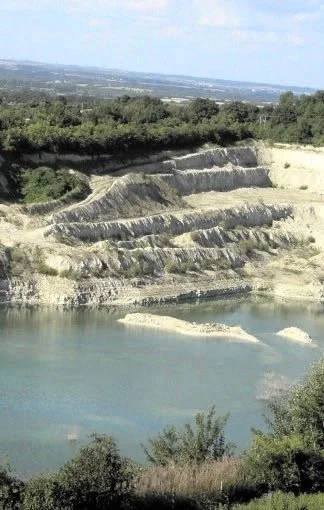
Chinnor Quarry
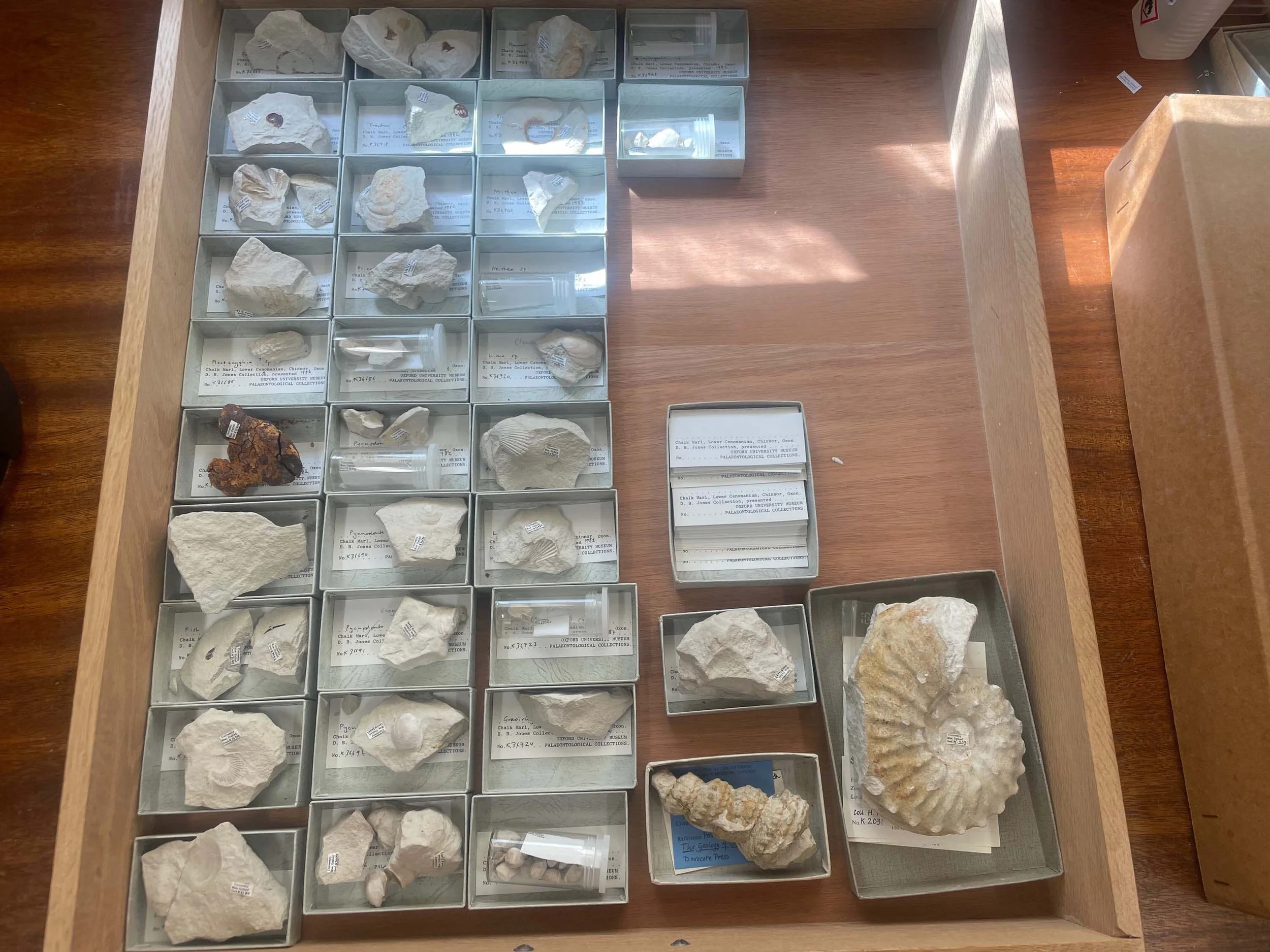
Some of the fossils found in the quarry.
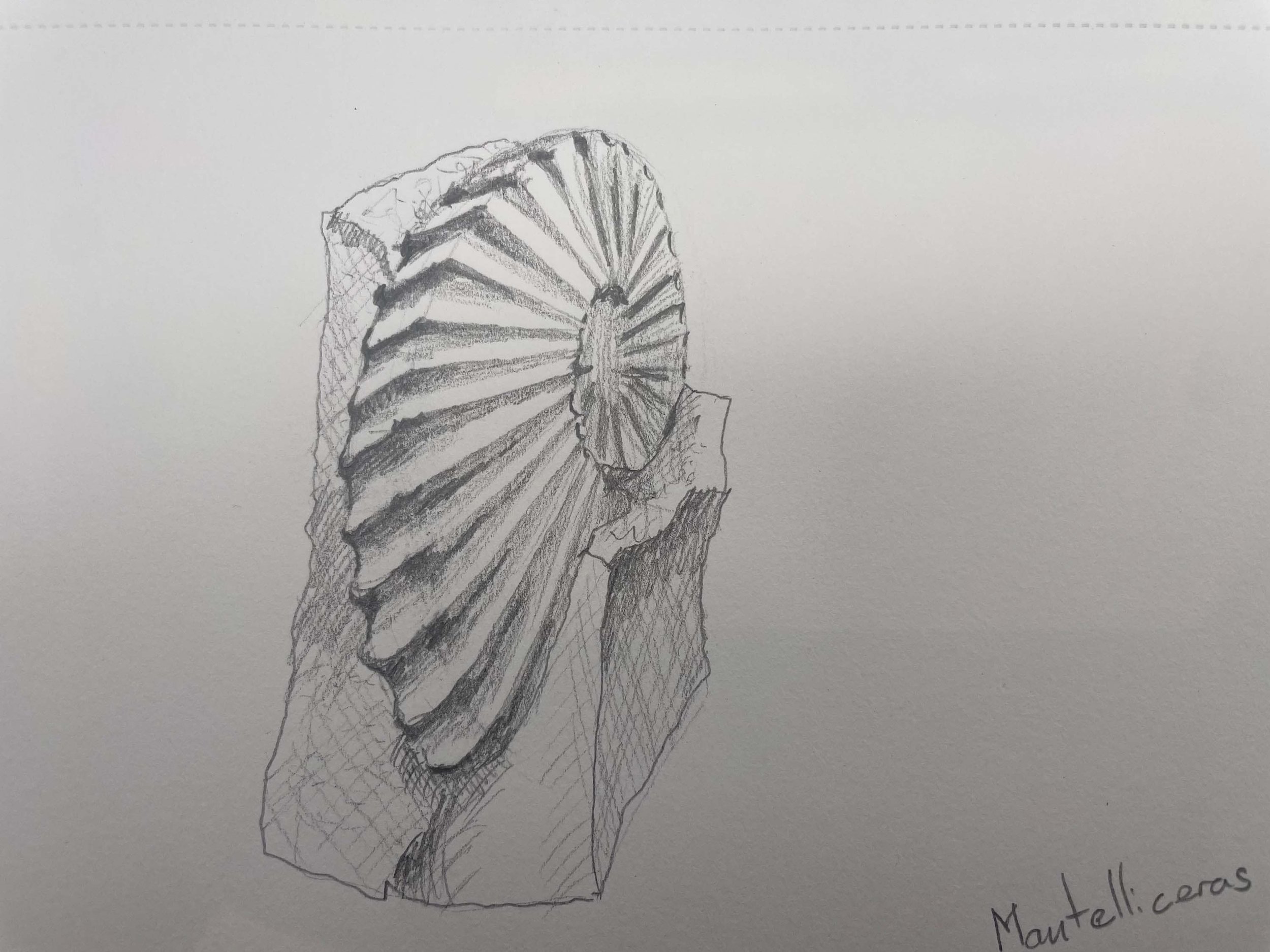
When I researched more about chalk I found that fossils such as those I was sketching only made up a tiny fraction of chalk. What chalk was really made from was Coccoliths, tiny microscopic creatures that would float in the warm shallow water living off bacteria in the water. When I saw the photos of these tiny creatures in comparison to the vast quantities if chalk I knew I had to make my sculpture of them as it is an awe inspiring to think that so many tiny creatures can create whole landscapes where we now live.
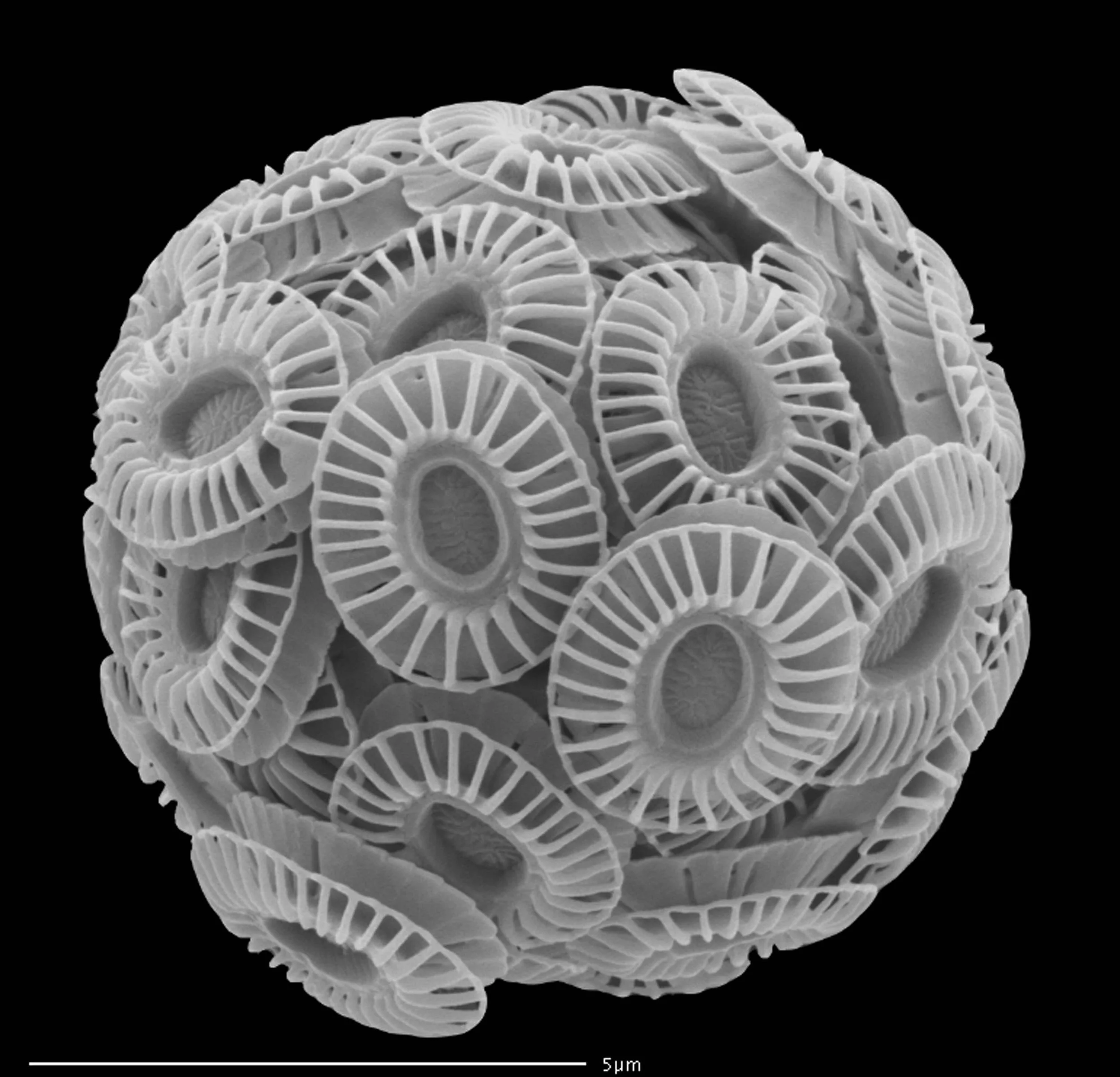
Photo of a coccolith under a microscope.
I used 3D CAD to design my own version of a coccolith, with such intricate patterns that only a computer and modern 3D printer could produce. I am currently working on the 3D prints so I can then cast the final shapes in a cement (chalk) based product.
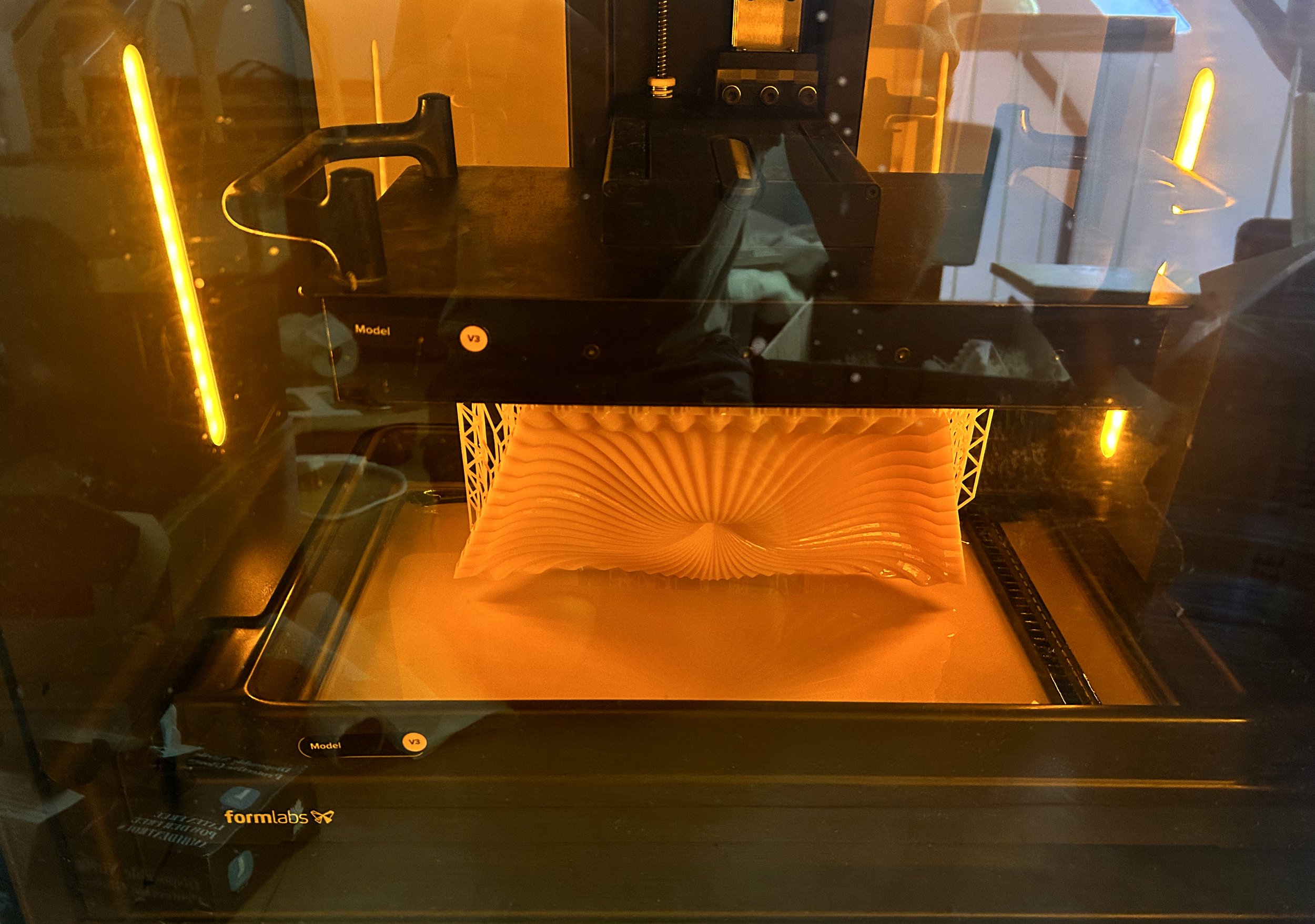
First 3D prints of one Coccolith plate.